System-wide
Architecture Design
First decide the system-wide framework. Aligning availability, responsibility scope, cost, governance, network, and data design up front makes later design decisions clearer.
The 8 items in this chapter
Check the foundational design decisions without omissions.

Turn vague quality into numbers
Instead of "avoid downtime as much as possible," decide availability, RTO, and RPO. With numbers set, you can judge how much redundancy and backup you need.
Separate responsibility scopes
IaaS offers high freedom but a wider management scope. PaaS leaves more to Azure, easing development and operations, though with some constraints.
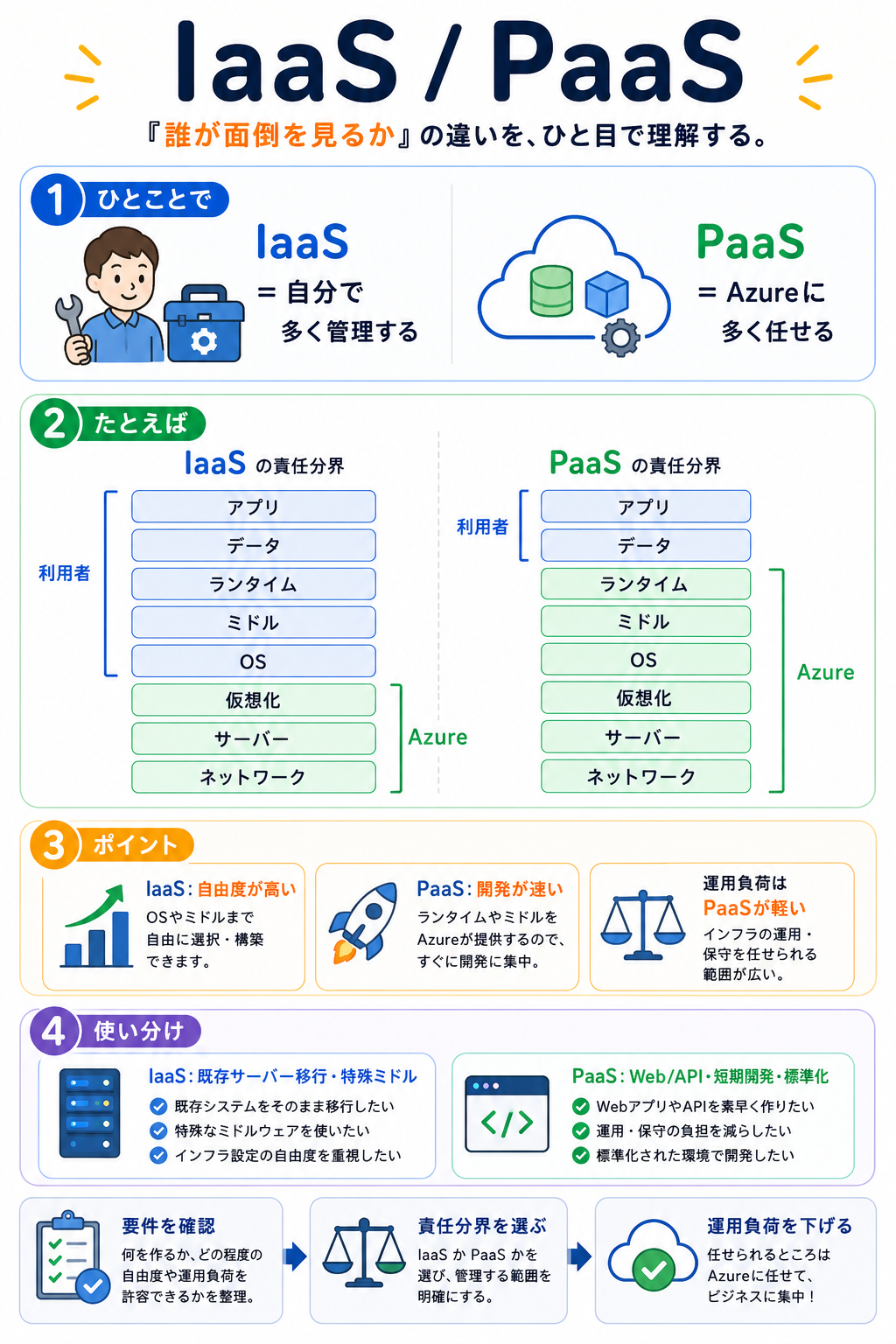
Align cost, review, naming, and governance
Decide rules for cost, review, naming, and permissions up front so you do not struggle later.
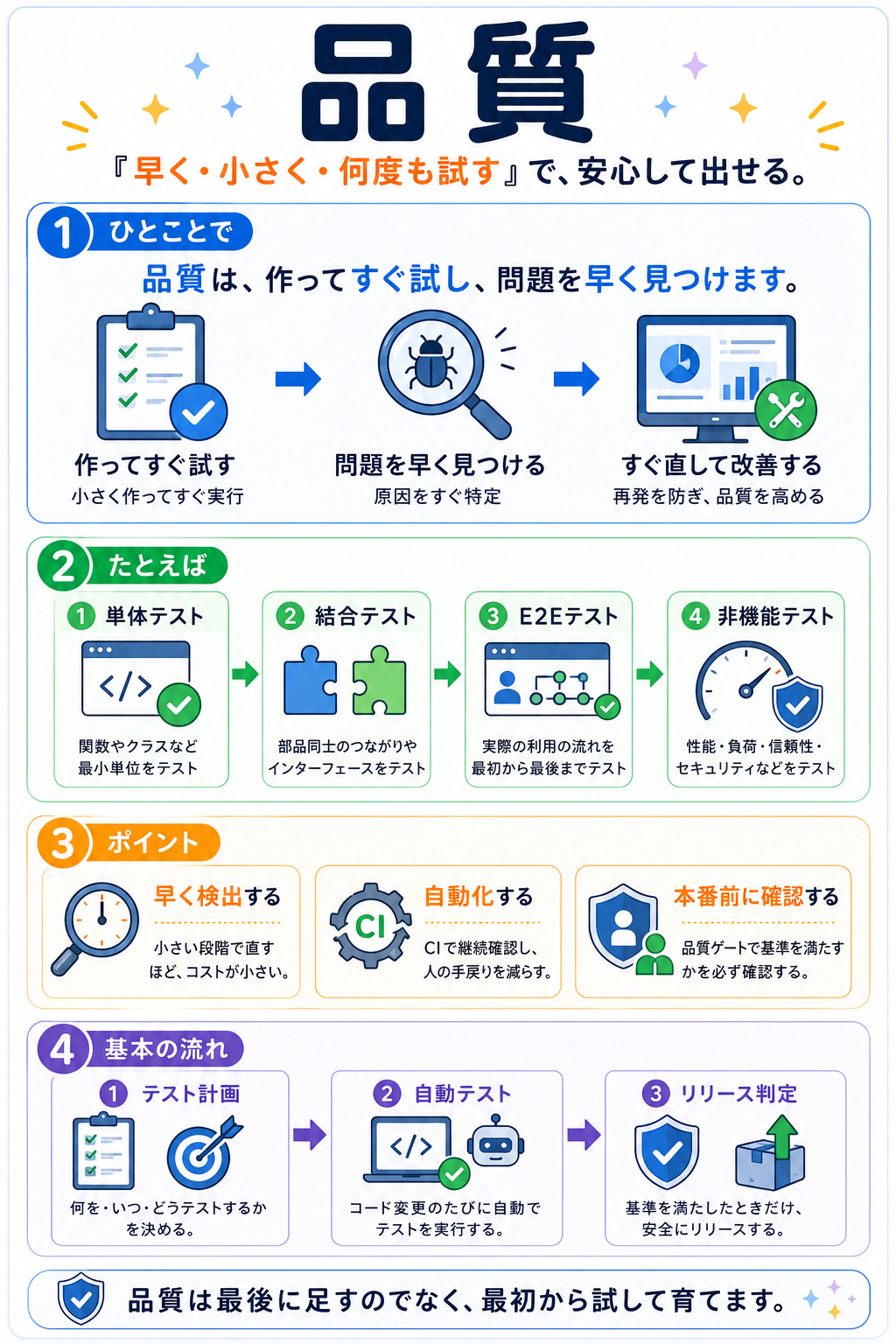
Cost management
Estimate, visualize, and adjust as you go.
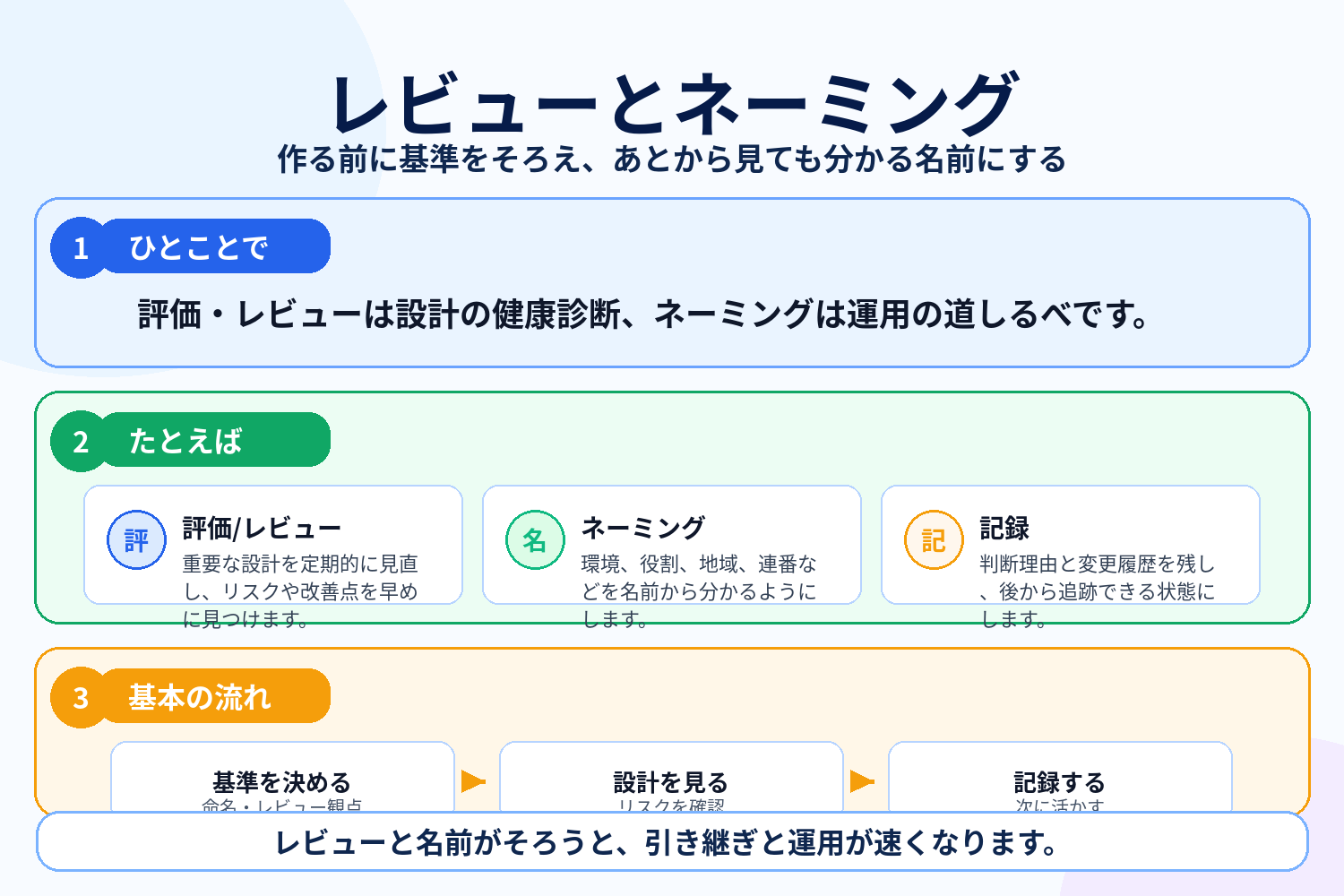
Assessment/Review and Naming
Review designs regularly and make roles clear from names.
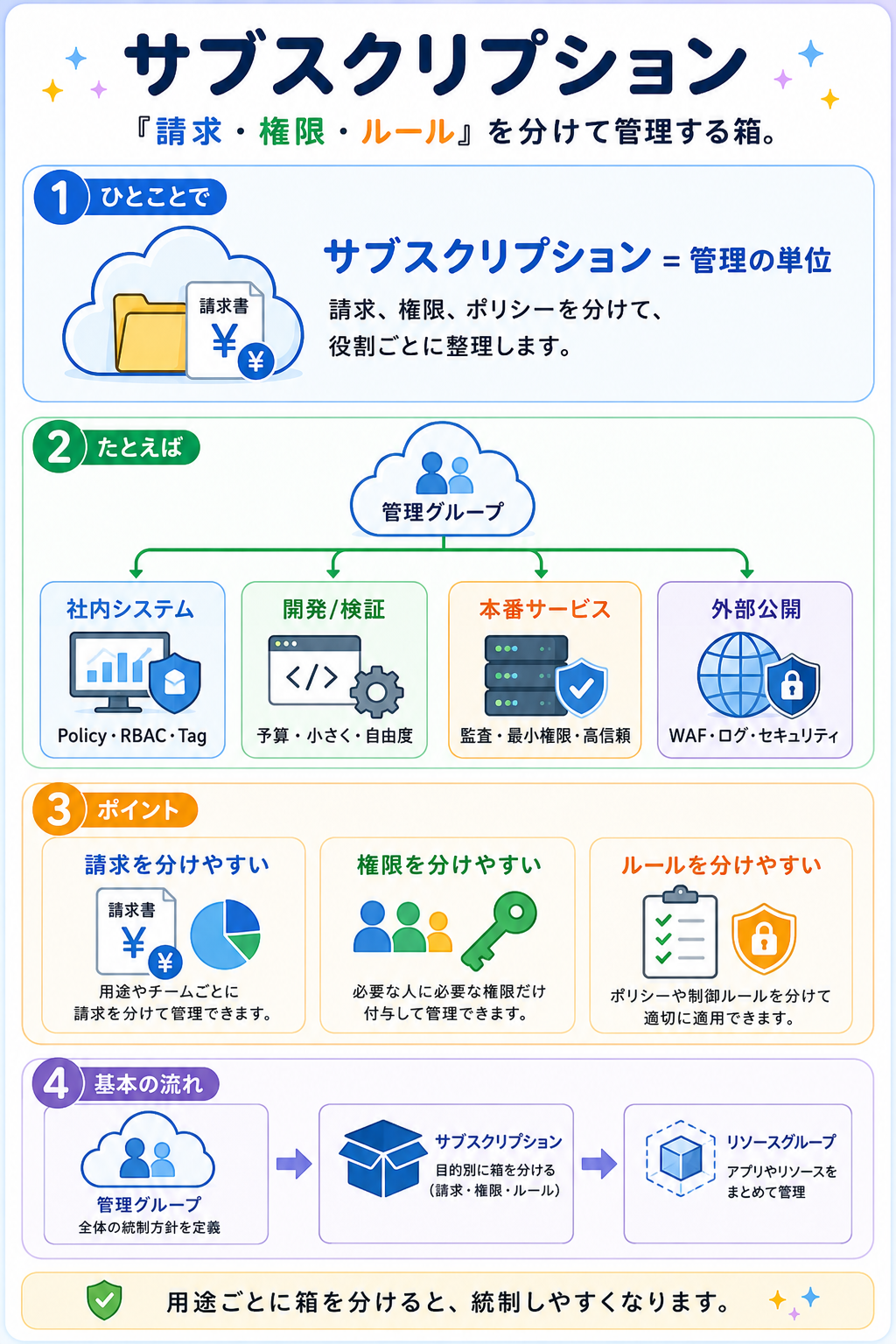
Subscription management
Separate billing, permissions, and policies into boxes by purpose.
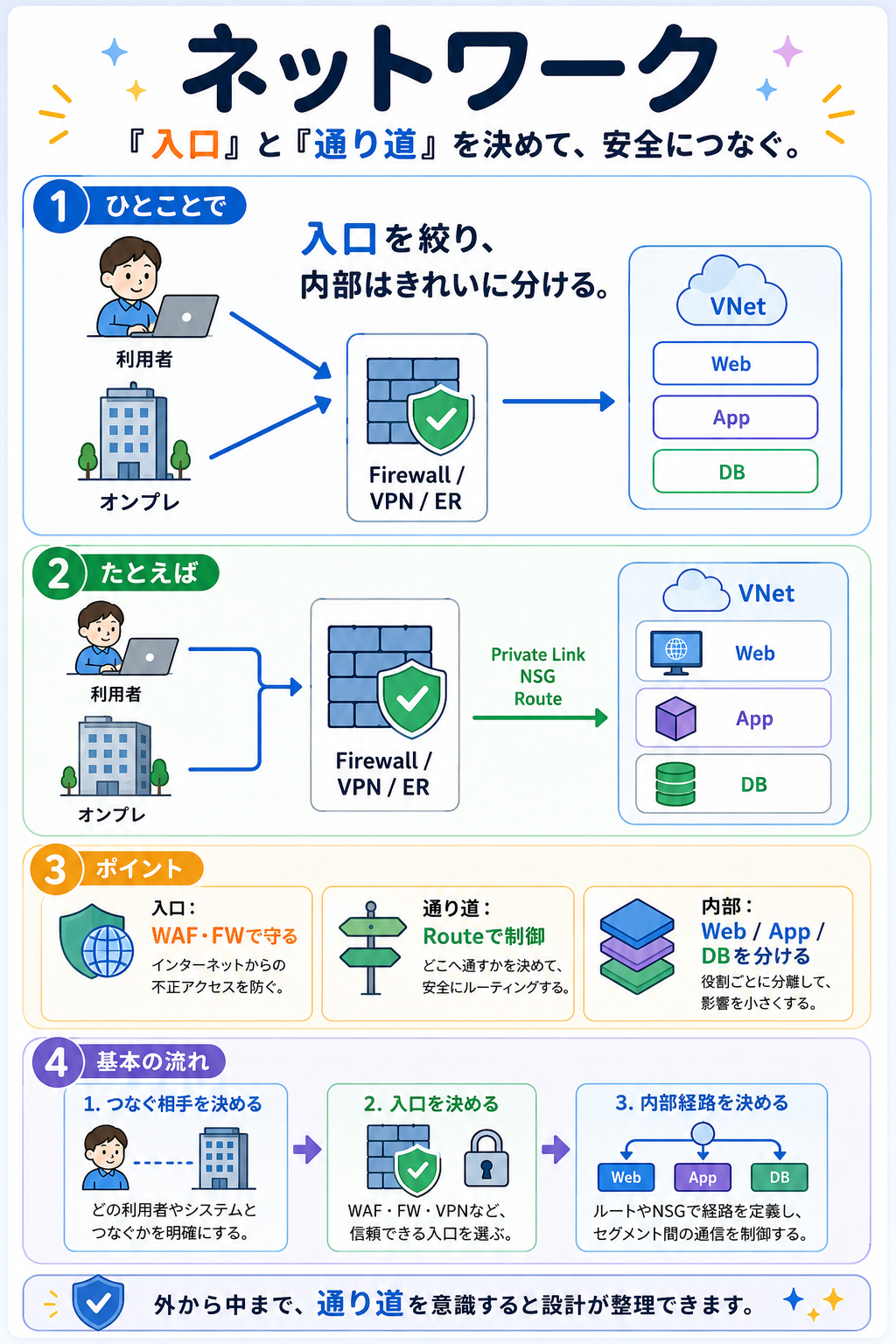
Network configuration
Decide who enters, from where, and by which path.
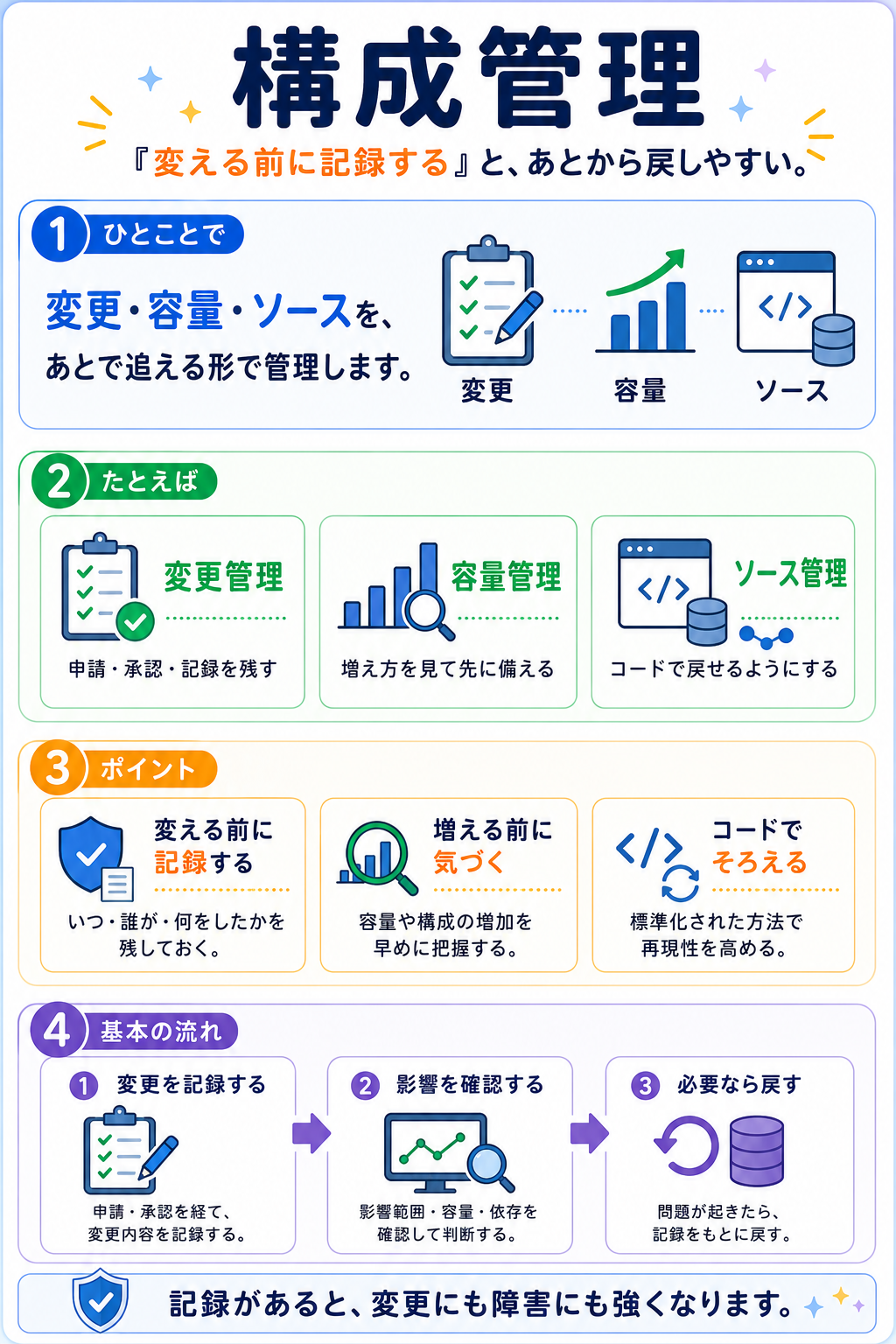
Plan data through to a restorable state
Storing data is not enough. Deciding replication, backup, and restore testing prepares you for failures and accidental deletion.
Numbers and responsibility
- Decided SLA, RTO, and RPO.
- Can explain the IaaS/PaaS responsibility scope.
- Set up cost visualization.
Governance
- Decided review criteria.
- Decided naming rules.
- Separated subscriptions and permissions.
Configuration
- Designed network paths.
- Decided data storage and restore methods.
- Tested the restore procedure.