Chapter 4 / SecuritySecurity
Security
Architecture Design
Security becomes easier to organize by separating what to protect, limiting permissions, and keeping records. Build it into the design from the start, not as an afterthought.
3 Guidelines
The 3 items in this chapter
1Cloud securitySeparate what to protect and the measures.
2Audit/GovernanceMake it traceable later with rules and records.
3Identity/Access rightsGrant only needed permissions for only the needed period.
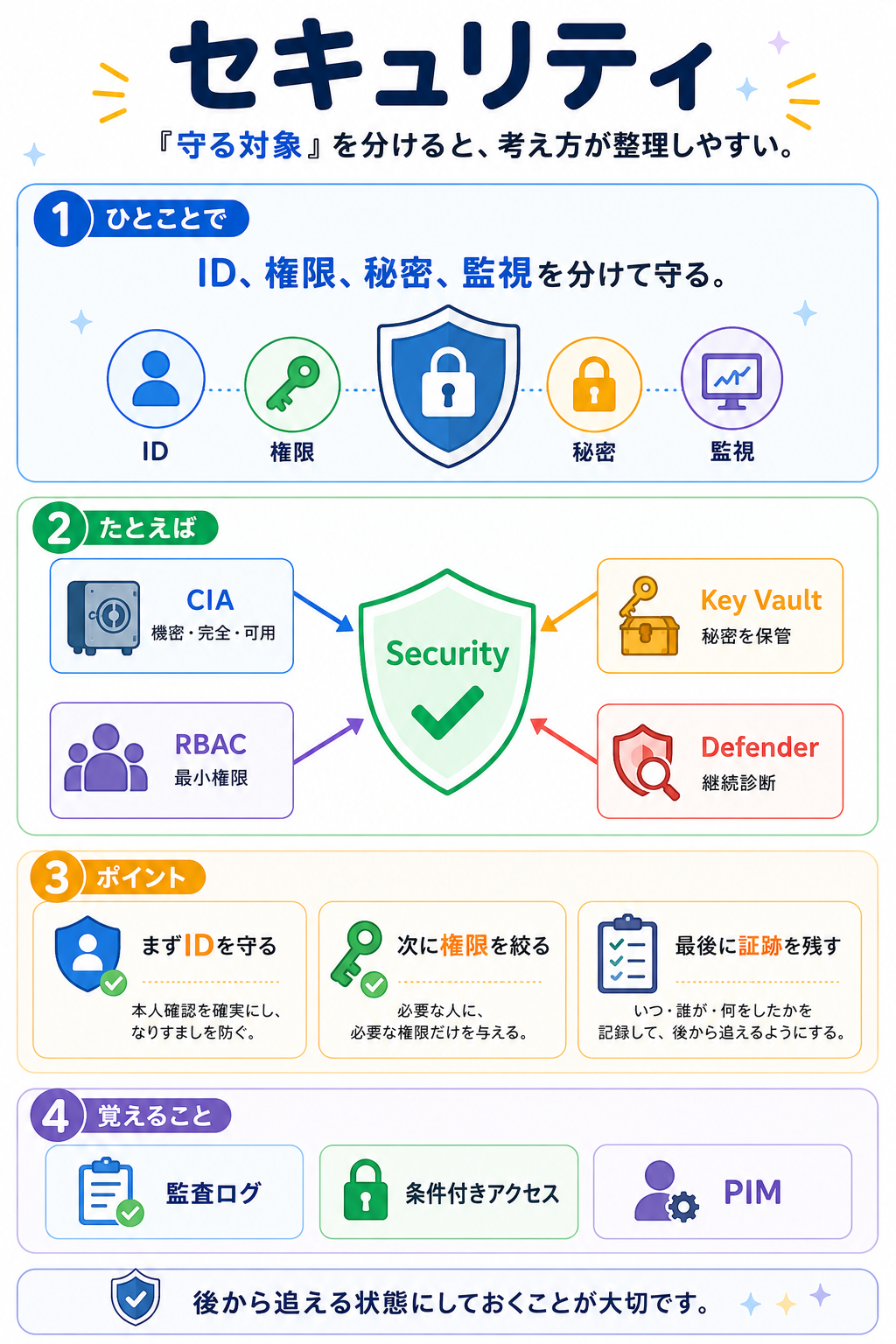
Cloud Security
Separate what to protect
Organize data, identity, permissions, secrets, and logs from separate perspectives. Clarifying what to protect makes choosing measures easier.
Check confidentiality, integrity, and availability.Store secrets in a secure location.Enable threat detection and continuous assessment.
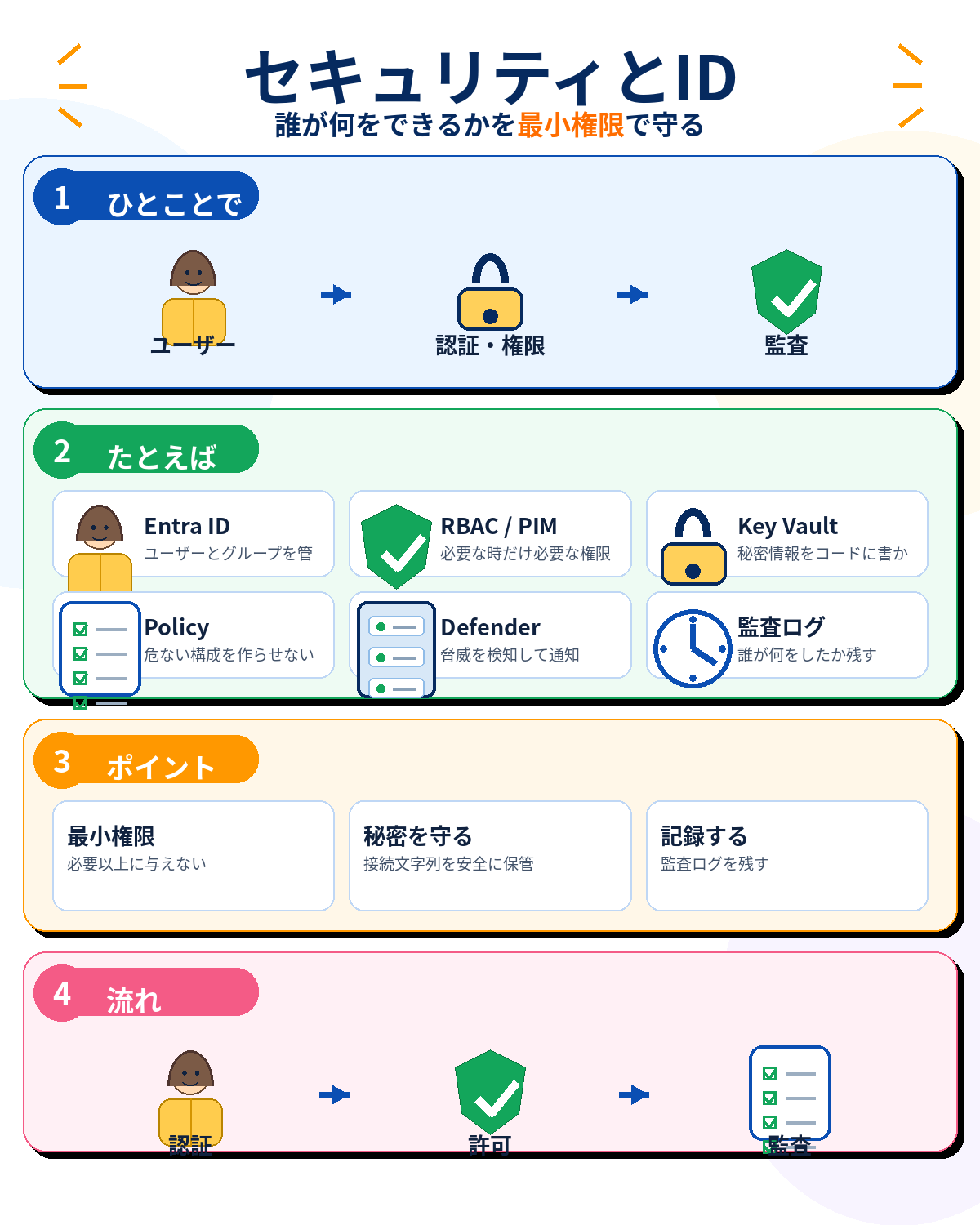
Identity / Audit
Limit permissions and keep records
Identity and permissions are the entry to security. Grant least privilege, elevate temporarily for critical actions, and keep operation records.
Use RBAC and PIM appropriately.Manage secrets with Key Vault.Continuously review audit logs and rules.
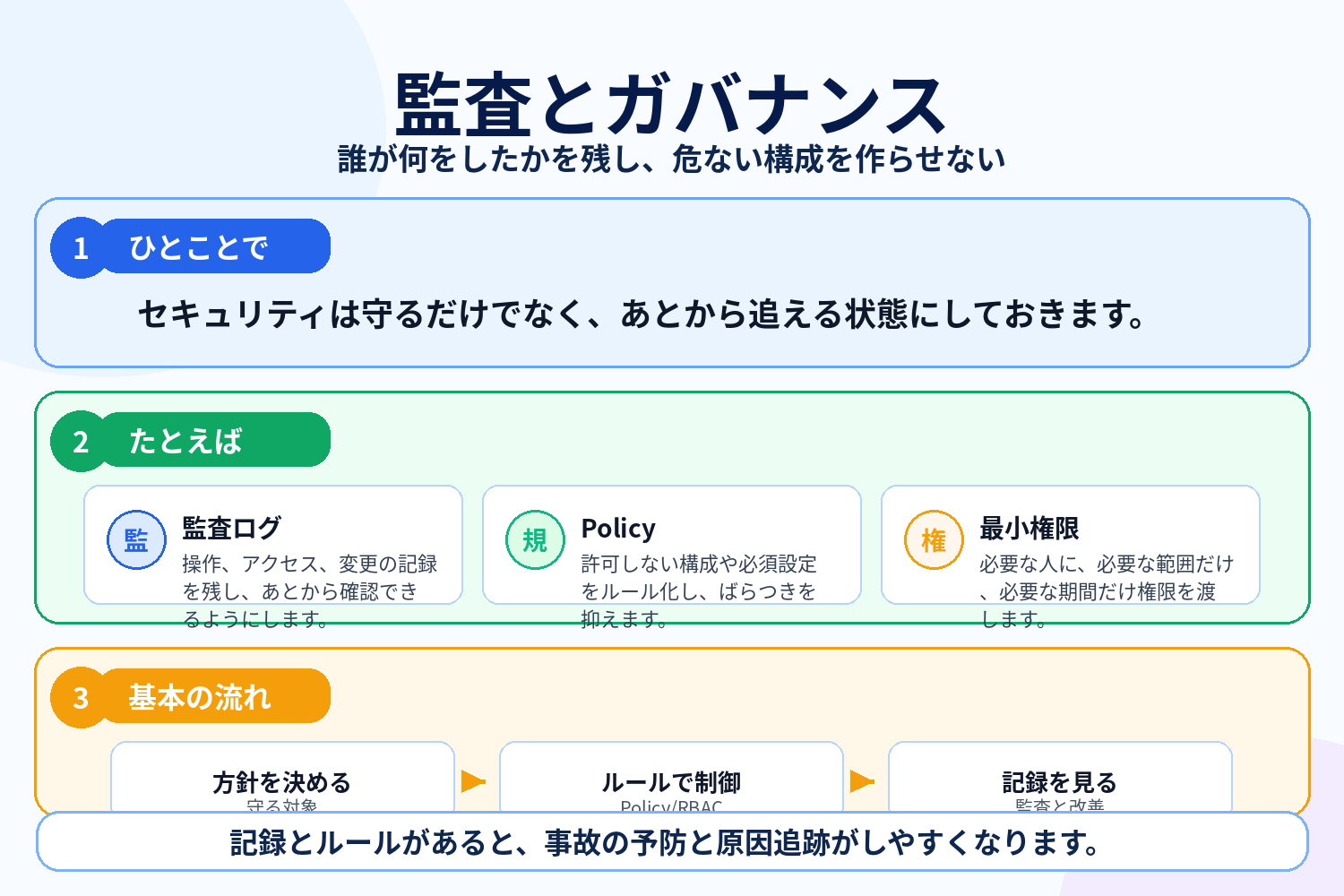
Audit and governance
Reduce risky configurations and keep things traceable with Policy, RBAC, and audit logs.
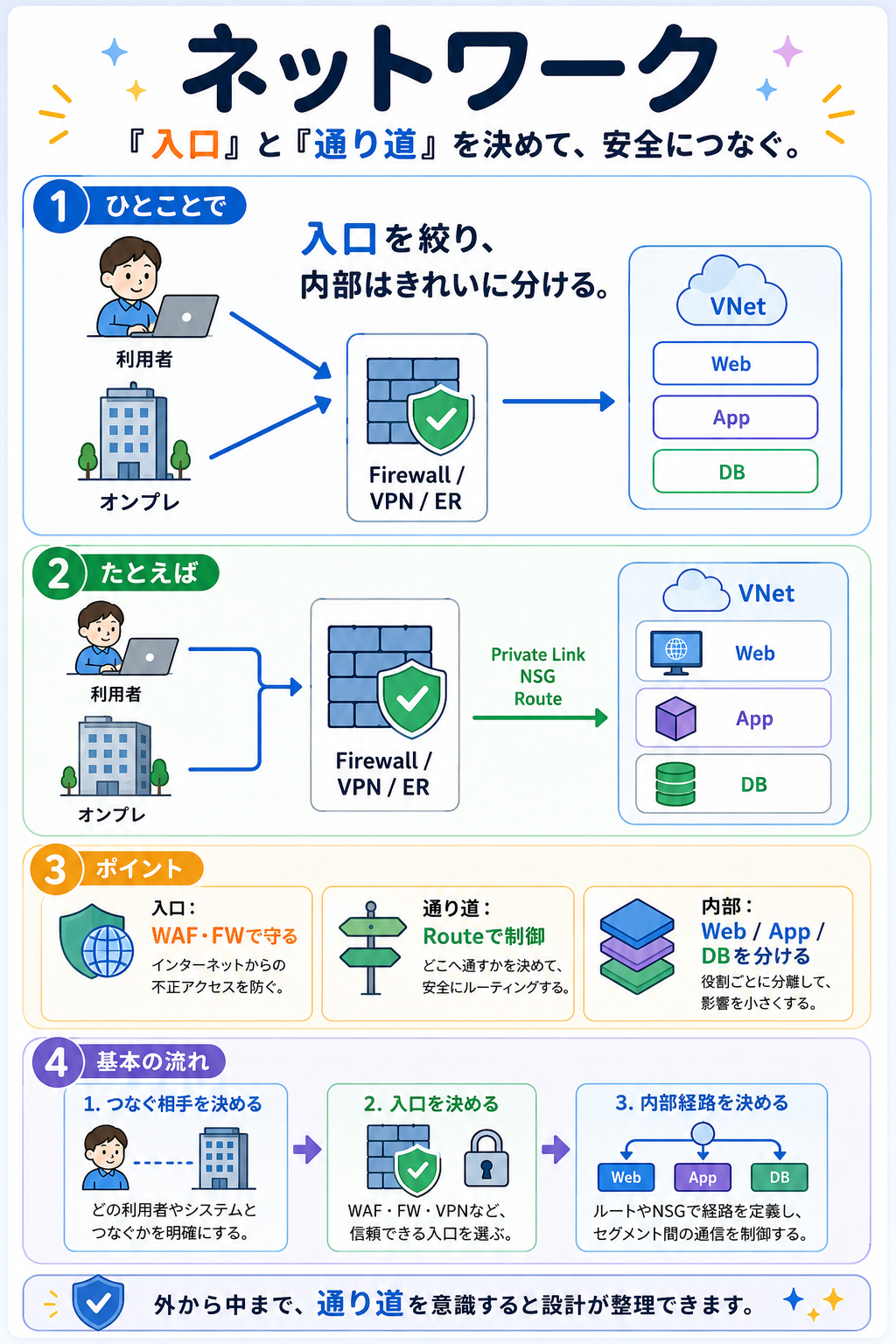
Network defense
Narrow the entry, control the path, and segment the interior.